
The Maturity Curve: Insights from a Process Safety Management Gap Assessment
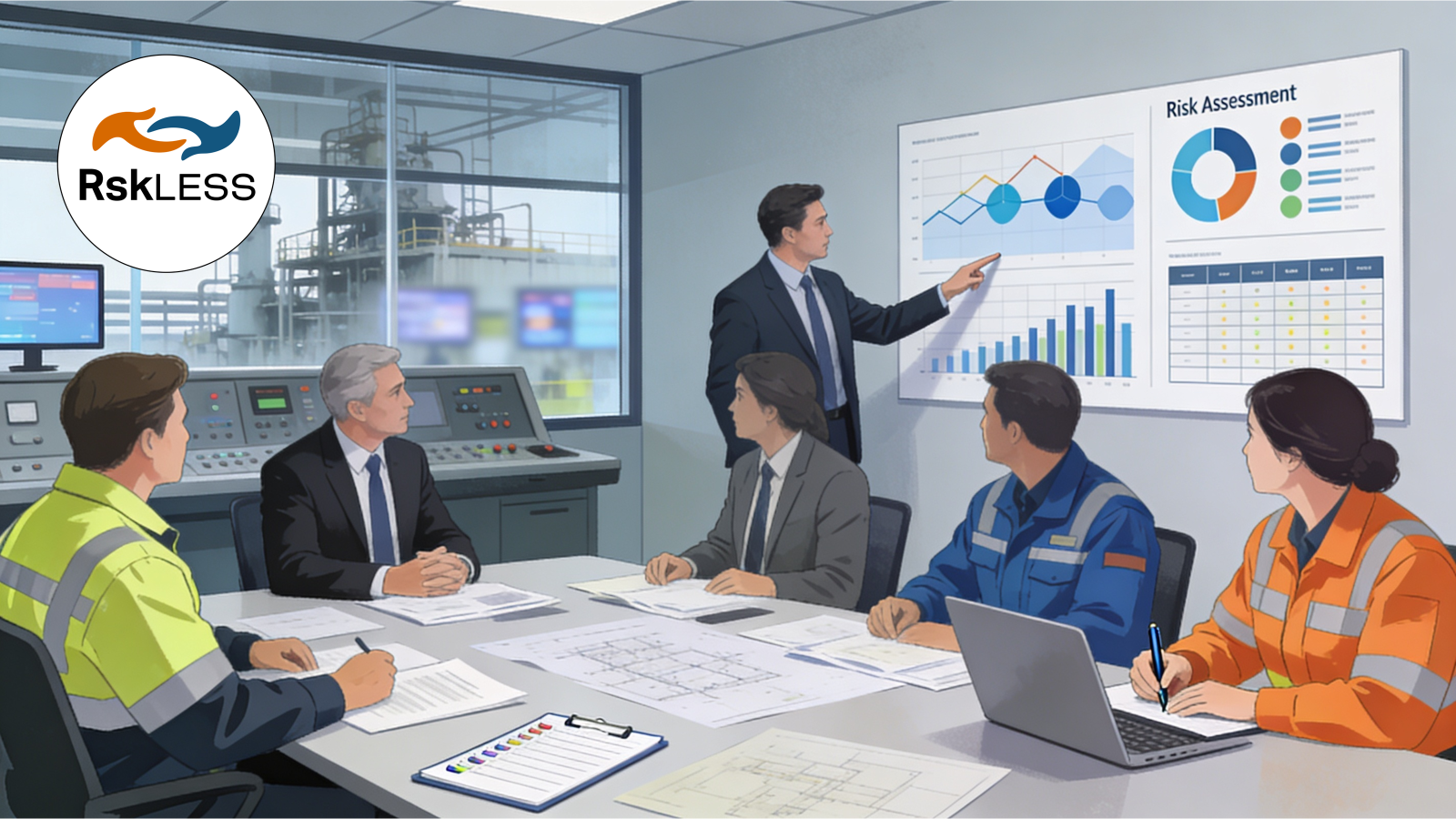
A strong process safety program does not happen by accident. It is built through disciplined reviews, clear ownership, and a practical understanding of how work is actually done in the field.
At RskLess, our PSM gap assessment approach combines document review, stakeholder interviews, and a structured comparison against recognized industry expectations, including CSA Z767. In a recent project to deliver a PSM gap assessment for a reputable oil and gas company in Alberta, the team reviewed 246 documents and conducted 22 interviews with leaders and site personnel across operations, engineering, maintenance, and safety.
What We Reviewed
The assessment looked broadly at the systems that support process safety, including policies, procedures, process safety information, management of change, risk assessment, training, emergency response, incident investigation, audits, and performance indicators. The review also considered supporting systems such as maintenance records, asset integrity programs, engineering records, and document repositories.
Just as important, the interviews helped identify how the system works in practice, not only what exists on paper. That combination of documentation and field insight gave a clear picture of where the foundation was already strong and where the next layer of maturity needed to be built.
What We Found by PSM Pillar
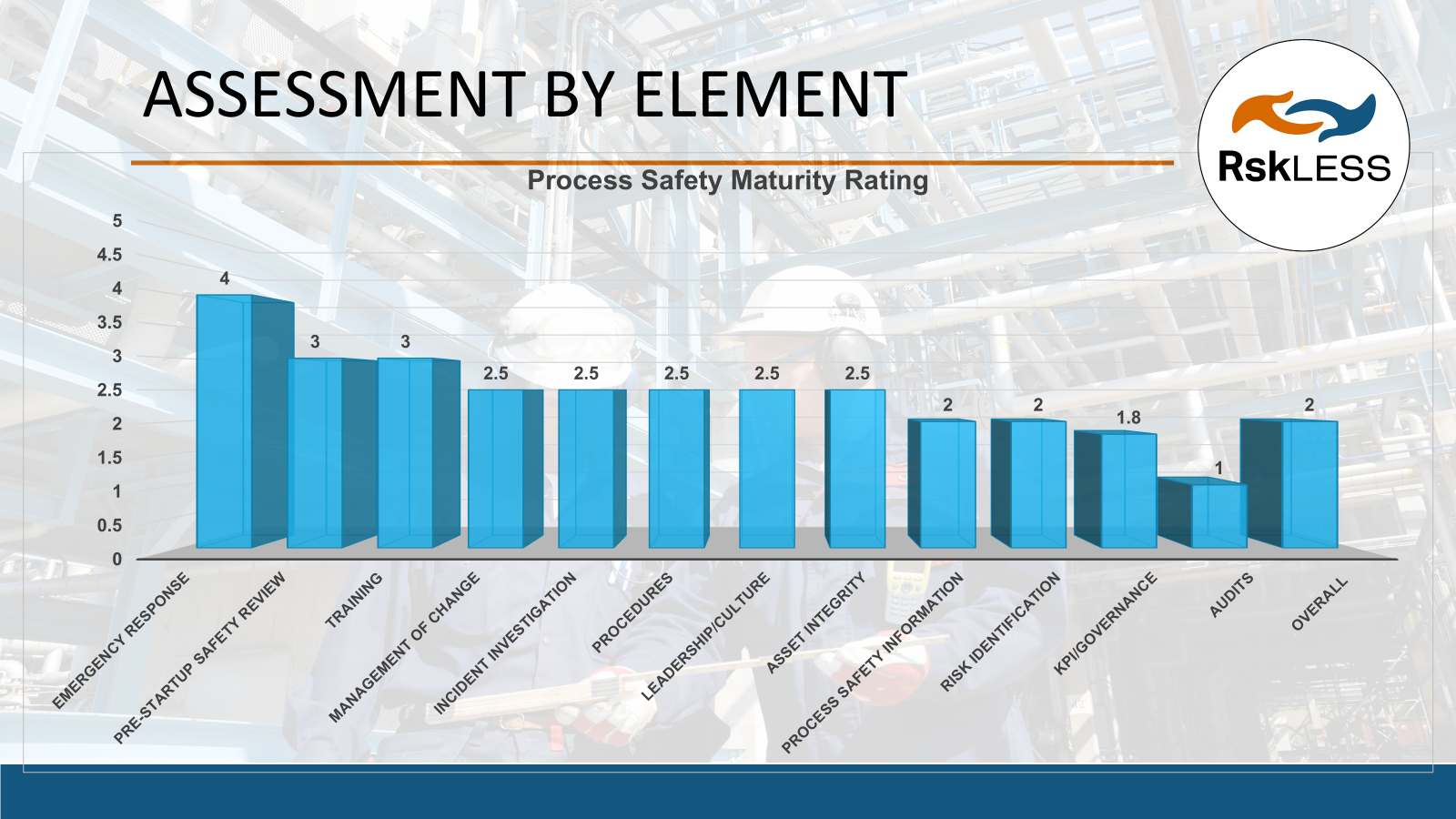
The assessment evaluated 11 key PSM pillars, rating each on the Hudson Safety Maturity Curve. Here's the detailed breakdown of strengths and gaps.
1. Management Culture & Conduct of Operations
Strengths: Safety prioritized over production with stop-work authority; visible field leadership; training roadmap monitored by executives.
Gaps: Increase PSM sponsorship from senior management and PSM discussion during field interactions; define PSM element owners beyond HSE team.
2. Process Knowledge & Documentation
Strengths: Good project documentation management; central repositories in place.
Gaps: Need to formalize PSI definition and document register; create a master technical deliverables list with updated requirements.
3. Process Risk Assessments & Risk Reduction
Strengths: Risk assessments for all projects (HAZOP for large, What-If for medium); third-party PHA facilitation; good OHS risk awareness.
Gaps: Need to adopt a cyclic PHA program with a standardized PHA standard/framework. The risk matrix was not fully understood, and there is an opportunity to create a chemical interaction matrix and risk register.
4. Management of Change
Strengths: Mature technical MOC process with formal reviews; well-written MOC protocol.
Gaps: The process for non-technical MOC (personnel, vendor changes) can be improved; add a standardized SME review checklist and ensure proper levels of document approval.
5. Pre-Startup Safety Review
Strengths: Defined PSSR process/checklist; risk assessments address deficiencies; minimum personnel requirements specified.
Gaps: Create a standalone PSSR procedure with a definition to improve subjective complexity criteria, and add PHA recommendation closure verification.
6. Process & Equipment Integrity
Strengths: Low maintenance backlog; E-maintenance PM tracking; asset integrity framework for piping/vessels.
Gaps: Establish critical control identification/ranking and maintenance effectiveness KPIs. Ensure clear communication and identification of impaired equipment with better shift handover.
7. Procedures
Strengths: Operating procedure review process (every 3 years); HSE input on high-risk procedures.
Gaps: Need PSM-specific procedures (cyclic PHA, internal audits); inconsistent procedure review tracking.
8. Training & Competency
Strengths: Robust LMS tracking; competency evaluation system; hands-on OJT qualification; training matrix.
Gaps: No PSM-specific training; no PSM critical roles identified; inconsistent non-LMS training rigor.
9. Emergency Response
Strengths: Annual full-scale exercises; monthly tabletop training; external vendor partnership; management involvement.
Gaps: Emergency scenarios not derived from PHAs; no tracked closure of exercise recommendations.
10. Incident/Accident Investigation
Strengths: Incident classification matrix; Taproot RCA for high-severity; learning from past events.
Gaps: Unclear senior management oversight criteria; can improve on PSM incident severity recognition.
11. Audit & KPIs
Strengths: Regulatory/COR audits complete; some PM KPIs tracked.
Gaps: No PSM audit strategy (1st/2nd/3rd party); no comprehensive KPI framework per API RP 754.
Main Opportunities
The assessment positioned the organization at Hudson Level 2 (Reactive), with clear paths to Level 3 (Planned) and beyond. Primary opportunities include formal PSM policy/standard development, element ownership assignment, PSM training rollout, cyclic PHA implementation, and KPI/audit framework establishment.
Priority Roadmap
Phase I - Foundation: PSM policy/standard, leadership training, element owners.
Phase II - Deployment: PSM KPIs, cyclic PHA, critical control ID.
Phase III - Sustain: Audit protocols, standard updates.
Path Forward
This organization demonstrated strong cultural foundations and many individual PSM elements working effectively. The gap assessment provided a clear blueprint to connect these strengths into an integrated system that delivers predictable process safety performance. With executive sponsorship and disciplined execution of the roadmap, proactive PSM maturity is achievable within 18-24 months.
At RskLess, our goal is to help you bridge these gaps, ensuring that your PSM Programs are not just checkboxes on a form, but well understood and adopted to help you be safer than yesterday.
